People across India speak a lot about grains. Every home has its own food habits and old family opinions. Someone says eat chapati for best energy, someone else in the room says try ragi for better sugar balance.
Many folks feel stuck figuring which grain gives better control on blood glucose. People dealing with diabetes end up super stressed about daily rotis, dosas, upma, snacks, every little thing. It becomes tiring. This happens because the glycemic index topic appears confusing and medical sounding. The goal here is not to scare anyone with technical science words. This guide stays simple so common readers get clarity without scratching head. Real stories from real kitchens matter.
Choosing smart grain changes day mood, sleep quality, and body energy. Let’s talk very clear about the glycemic index of ragi vs wheat in real life eating patterns inside Indian homes. This breakdown tries to help picking the right grain without confusion.
Meaning of Glycemic Index and How It Is Measured Without Using Science Words
The glycemic index tells how fast a food turns into glucose and rises sugar level after eating. Folks hear this scale from doctors a lot. It works like a speed meter. Food with lower number moves slow in digestion.
Food with high number moves super fast and pushes sugar suddenly. Bodies react to speed very differently. Some people get hungry very quick after fast-GI food. Some feel sleepy or tired. If sugar jumps fast, pancreas works extra hard to produce insulin. More insulin leads to more hunger. That cycle goes on and on.
So GI scale became very popular in diabetes care. GI below 55 stays low category. 56 to 69 stays medium. 70 and more stays high category. This meter gives an idea about what plate does inside body. Numbers do not define complete health but they help understand daily eating experience.
Every human body reacts unique to food. Two people eat same chapati and feel different energy afterward. GI is a guide, not strict rule written in stone. Still, it gives strong support for making better food choices.
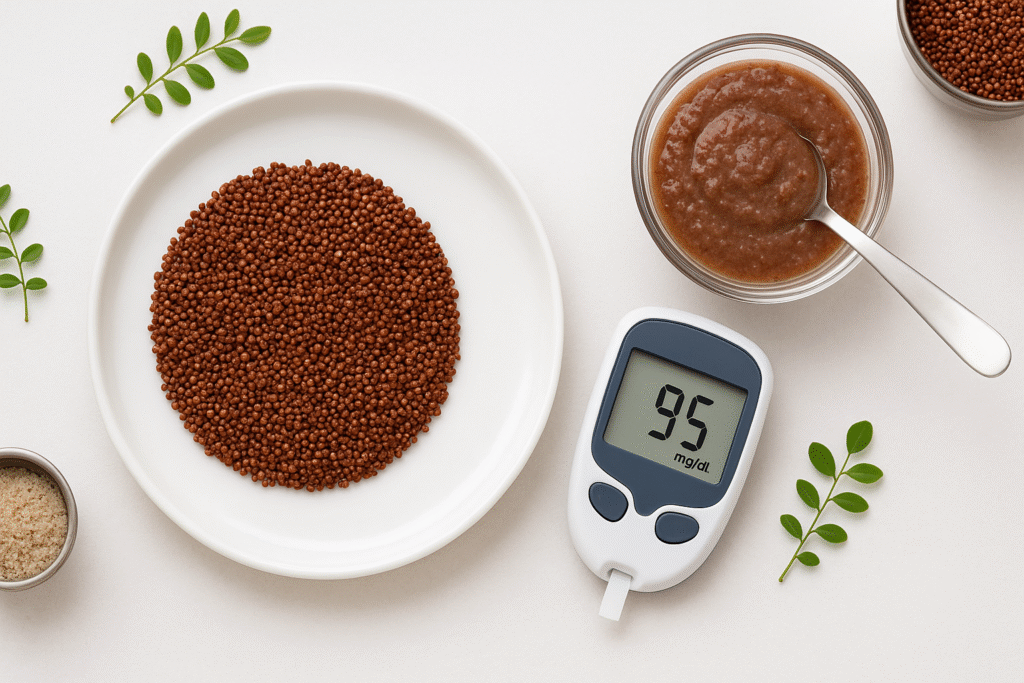
Colloquial moment here: Folks say yaar, roti khaya aur phir bhi bhookh lag rahi, kya fayda. That’s GI working in background.
Why Glycemic Index Gets Talked About So Much in Indian Family Kitchens
India has a deep food culture. Meals revolve around grains. North Indians majorly depend on wheat chapati. South Indian states use more ragi, jowar, bajra, rice. People often do not give second thought to grains their family ate for generations. But diabetes cases rising crazy fast in cities and villages. Doctors say poor blood sugar management might link with choices we eat every day.
When blood sugar keeps jumping and crashing, body feels irritated and brain stays foggy. People get angry quick. Hunger comes fast, cravings jump out of nowhere. Those cravings lead to overeating. People say “bro, just ate half hour back and again craving something”. That’s high GI behavior.
Ragi stands with slow digestion. It keeps stomach full longer. It supports calm feeling instead of sugar rollercoaster. Older generation used ragi regularly due to strength and stamina. Modern audience shifted toward wheat and refined flour due to convenience. Slowly people returning to ragi because they noticing real difference in body energy.
GI matters for weight balance, hormonal balance, PCOS care, heart health and long-term insulin response. This understanding supports better choice on plate with less stress and more peace.
Glycemic Index of Ragi and Why Many Indians Trust It for Diabetes Care
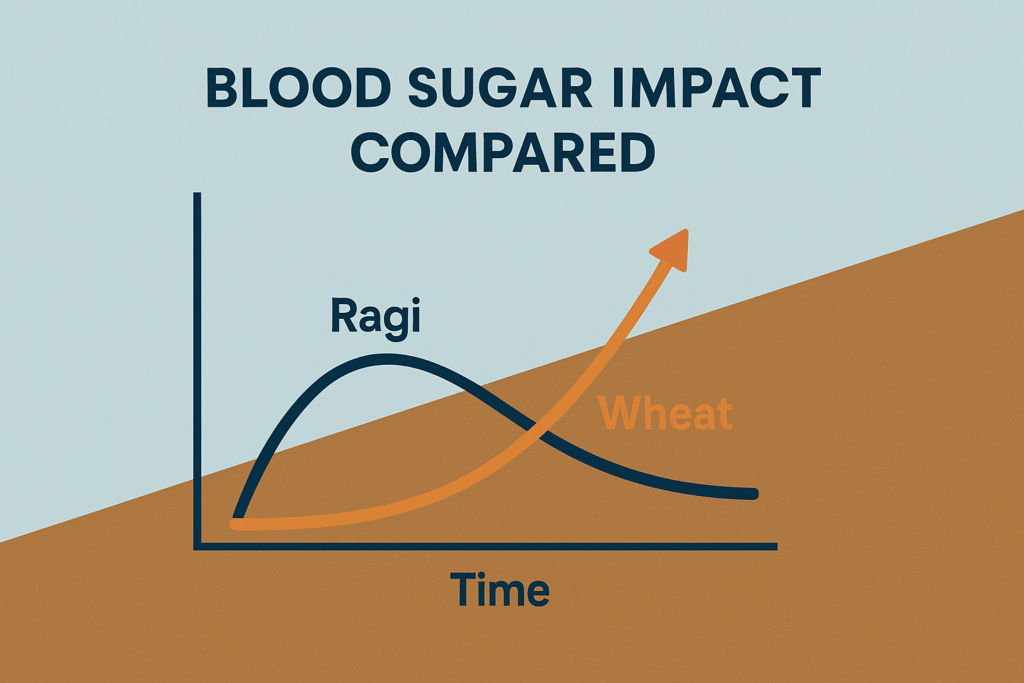
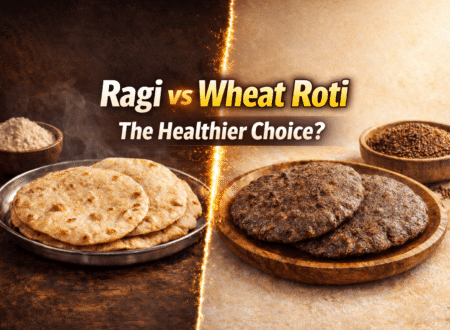
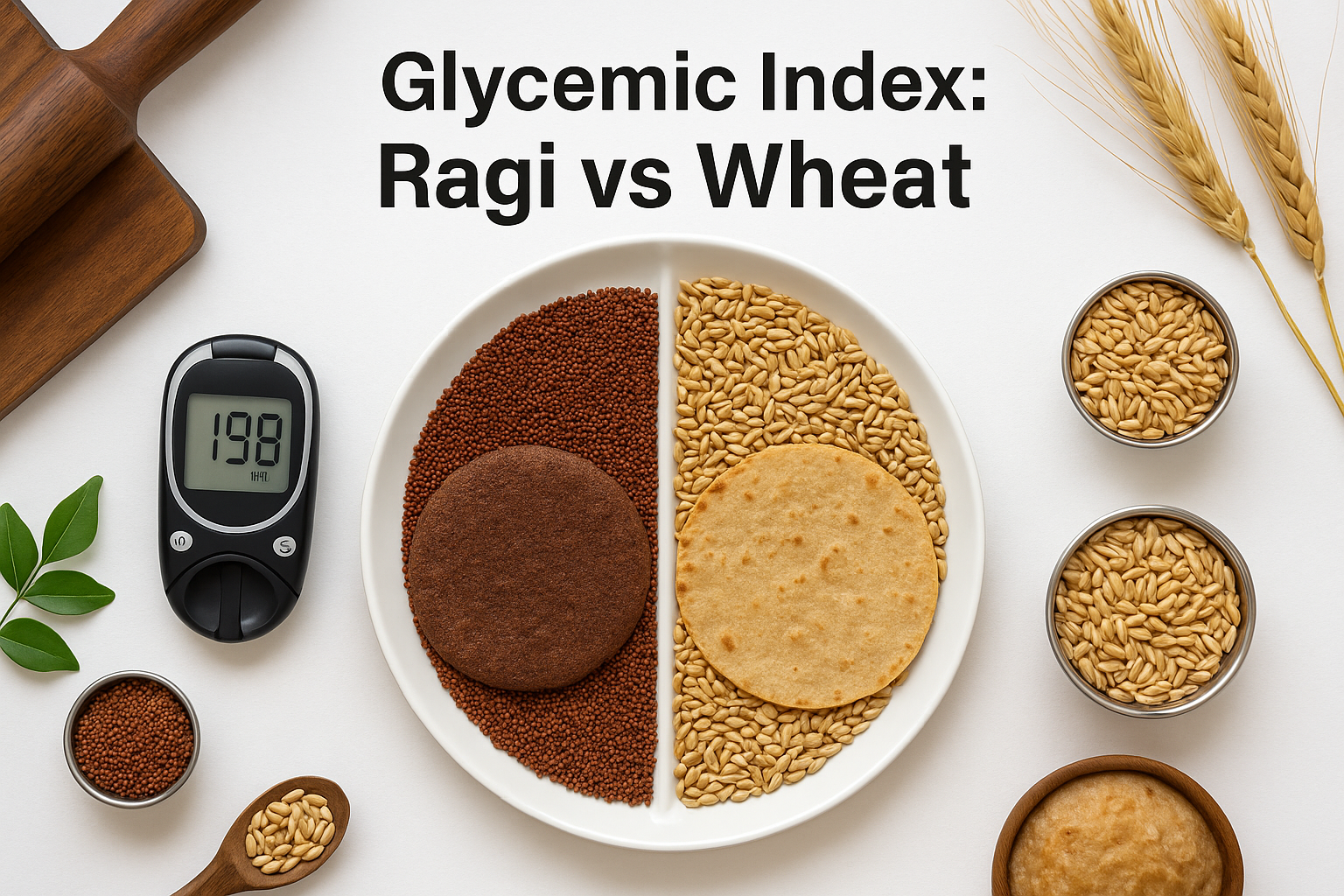
Ragi, also known as finger millet, has GI around 55, sitting inside low category. That means ragi moves slowly through digestion and sugar rises slowly. People with diabetes say ragi helps them feel steady across the day. Many dieticians suggest ragi roti or ragi dosa for breakfast instead of wheat. Families who try ragi often say they notice reduced hunger and fewer sugar crashes. Ragi contains fiber that slows sugar absorption. Ragi contains polyphenols that support metabolic balance. Very helpful inside diabetic meals.
Ragi fills stomach nicely without heavy feeling. Keeps energy stable. Someone trying for fat loss feels good after ragi lunch because cravings reduce. Eating ragi also gives emotional satisfaction because body stops asking again for snacks. That helps maintain discipline.
Rural athletes and farmers used ragi mudde for strength during long physical work. People say ragi gives power and stamina without headache feeling after carbs.
Nutritional Profile of Ragi and Real Benefits in Daily Indian Routines
Ragi contains calcium, iron, dietary fiber, antioxidants and amino acids. It supports bone strength due to high calcium. Many doctors suggest ragi for women and growing children. It is gluten-free grain so people with gluten sensitivity choose ragi. People with PCOS face insulin spikes very easily. Ragi keeps insulin smoother. Because insulin stays balanced, cravings and mood swings reduce.
Many moms say ragi porridge supports child growth naturally. Grandmas say ragi kheer helps with anemia due to iron. Gyms across Bengaluru see people choosing ragi malt post-workout because it carries steady energy and does not cause stomach bloating.
Ragi for weight loss became popular because it holds stomach full longer. Full stomach means no snacking every hour. Fat loss gets supported. People enjoy ragi dosa with coconut chutney and say wow feels good and light. Small food happiness matters.
Glycemic Index of Wheat and Reaction Inside Body After Eating Chapati
Whole wheat holds GI around 69, kept in medium category. It moves faster in digestion than ragi. Sugar rises faster and drops again quickly. People feel sleepy or lazy after meals, specially afternoon chapati. Body sends hunger signals again and mind keeps asking snacks.
People trying for diabetes control need to stay careful with wheat quantity. Wheat creates faster insulin demand. It suits people doing heavy physical activity since they need fast energy. But office workers sitting long feel heavy and tired. Wheat works well when eaten controlled and paired with protein, fiber and fats. Food combinations change GI effect a lot.
Refined wheat flour or maida sits much higher and spikes sugar rapidly. Lot of bakery products push sugar jump and mood crash. People late feel regret after eating bread or biscuits. GI explains that roller coaster.
Nutritional Profile of Wheat and How It Supports Balanced Energy
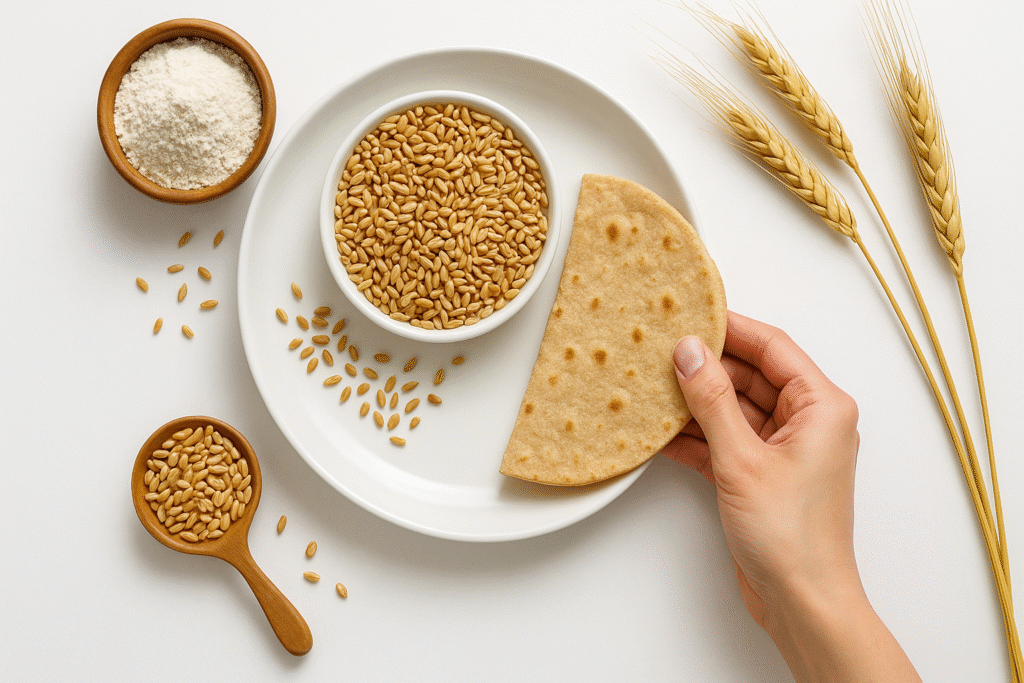
Wheat gives B vitamins, minerals like magnesium, zinc and some protein. Wheat fiber supports digestion and gut movement. Whole wheat chapati suits healthy people if eaten mindfully. But people with diabetes and obesity goals need controlled portions. Two small rotis paired with dal, paneer, curd, salad, ghee creates slower sugar release.
Many families add methi or spinach inside wheat dough for extra fiber. This trick slows digestion speed. People trying weight control must avoid eating 4-5 rotis at once. Too much wheat often leads to round belly. Small plates win.
Athletes love paratha or wheat pasta before sports because they need sharp fuel supply. Wheat works but depends who eats it and how much.
Comparing Ragi vs Wheat for Quick Clear Decision Making
| Factor | Ragi | Wheat |
| Glycemic Index | Around 55 | Around 69 |
| Fiber | High | Medium |
| Protein | Medium | Medium |
| Calcium | Very High | Low |
| Iron | Good | Moderate |
| Gluten | No | Yes |
| Sugar Spike | Low | Medium-High |
| Weight Loss Support | Strong | Depends quantity |
| Diabetes Friendly | Yes | Limited |
| Taste preference | Mild nutty | Familiar soft taste |
Story style note: People say taste of ragi needs time to adjust. After few days tongue loves it.
Which Grain Performs Better for Diabetes, Weight Loss, PCOS and Sugar Balance
Ragi vs Wheat keeps trending because most people want simple health improvements without medicines. For diabetes patients, ragi stays great pick. GI low, fiber high, keeps full. People with PCOS get big benefit from slow insulin effect. Ragi supports weight goals because it reduces hunger attacks. Many dieticians request clients to switch to ragi breakfast for smoother day.
Wheat suits people doing hard manual work. Wheat suits healthy individuals eating balanced meals. Wheat suits gym training pre-workout because body needs quick energy. So winner depends on person. Still ragi wins for diabetes and weight loss based lifestyles. Wheat works only if eaten correctly with portion control and food pairing.
Small reminder from Indian aunty wisdom: “Zyada roti khayega toh pet badhega beta”. True story.
Best Way to Eat Ragi and Wheat for Steady Sugar Levels and Happy Digestion
Tips from nutrition lovers and grandma kitchen hacks:
- Add ghee on chapati to slow digestion
- Mix vegetable puree into dough
- Eat protein side dish always with grain
- Try ragi dosa, ragi roti, ragi idli once or twice weekly
- Avoid maida and bakery flour for sugar care
- Have salad bowl before eating grains
Many people say ragi works best morning time because body uses energy steady all day. Wheat suits lunch for active people. Folks trying fat loss try ragi for dinner sometimes.
Indian Dishes Made Using Ragi and Wheat to Build Healthy Sugar Patterns
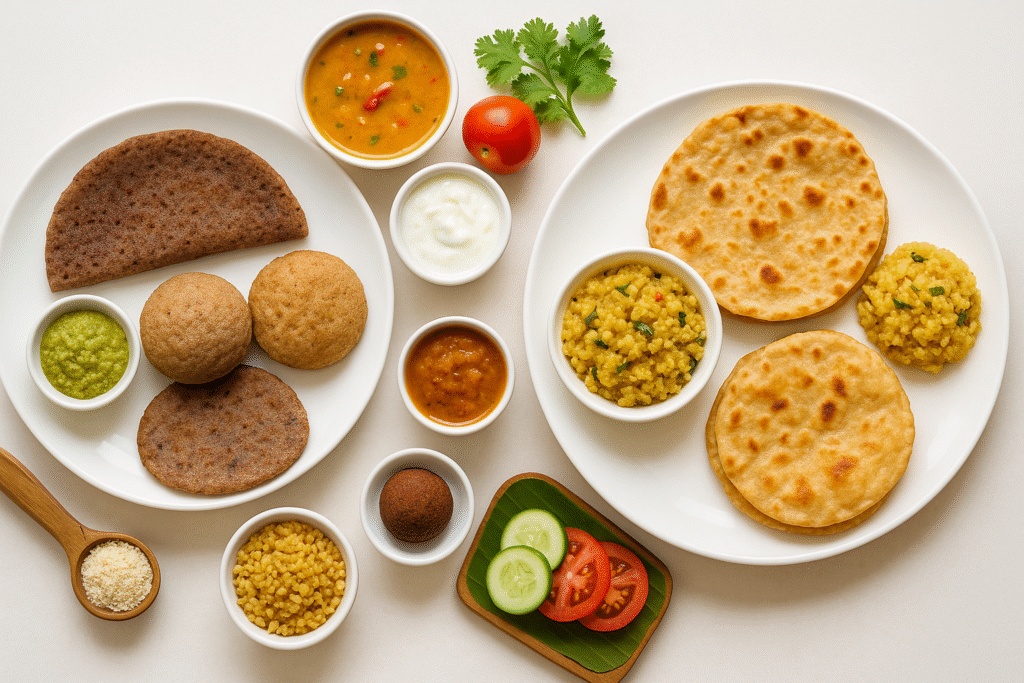
Some Indian comfort foods list below:
- Ragi dosa with coconut chutney
- Ragi porridge with jaggery for kids breakfast
- Ragi laddoo for festival snacks
- Wheat chapati with paneer sabzi
- Wheat roti with moong dal and salad
- Ragi mudde with sambar
- Ragi upma
People learning ragi recipes feel excited because lot of dishes available now. Restaurants in Bangalore, Mysore, Chennai serve ragi items everywhere.
Also Read: 9 Types of Millets Used in India With Notable Health Advantages
Who Should Choose Ragi and Who Should Choose Wheat with Clear Guidelines
Choose ragi if diabetes, PCOS, obesity, insulin resistance, digestion trouble, gluten issue, iron deficiency. Choose wheat if performing heavy physical work, bodybuilding, athlete lifestyle, healthy metabolism.
Kids can eat ragi for calcium. Elders like ragi mudde because bones need support. Adults with desk jobs feel light with ragi.
Ragi works well in exam time also because low sugar spikes keep mind calm. Students say focus stays better.
Expert Thoughts and Real Indian Experiences from Nutrition Coaches
Experts from clinical nutrition field say ragi contains resistant starch that slows sugar movement. That supports stable insulin. Wheat refines quickly so pairing important. Medical dieticians tell diabetic patients to shift one meal daily to millets. They share improved A1C and fasting sugar results.
People on online health forums discuss ragi transformation stories. Comments show weight drop and reduced medicine dose. People say skin looks bright because sugar swings reduce inflammation. Very cool outcome.